
The box-shaped valley
Hydroseeding in El Cajon, CA
Seeding where foothills ring the valley and send storm runoff toward the flat ground.
- No-charge site visit, with your estimate put in writing
- Seed mix matched to coastal or inland conditions
- A written watering plan with every new lawn
Grass at the Bottom of the Box
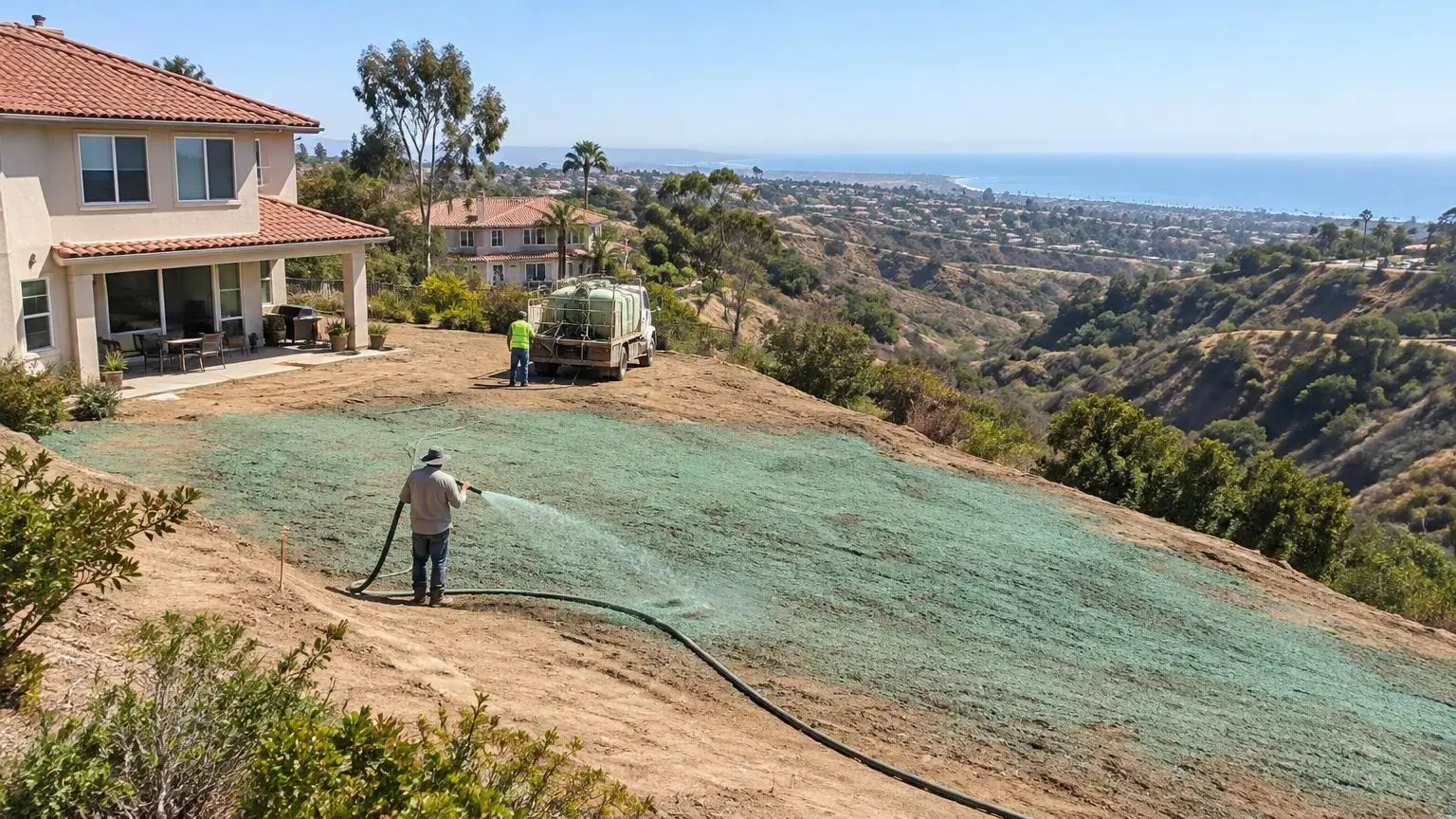
Hydroseeding in El Cajon has to account for the valley itself. The city's name refers to the box-like shape of the valley that surrounds it, and historically the foothills served as a barrier to straying cattle and a watershed that gathered the sparse rainfall. That same watershed still sends runoff downhill toward yards on the valley floor during winter storms.
Storms that arrive all at once
El Cajon averages about 11.63 inches of rain a year, spread fairly evenly through winter and rare in summer. The averages hide how intense single storms can be. The city once recorded 5.60 inches in 24 hours, on January 27, 1916, and 11.43 inches fell in January 1993. A fresh seeding that sits in the path of hillside runoff can wash in one night. We grade yards so water is directed around the lawn area through a swale or trench, then seed.
Wide temperature swings
The gap between daytime highs and nighttime lows averages about 24 degrees in summer and 26 in winter. The record high is 114 degrees, set September 5, 2020, and the record low is 19 degrees. Those extremes are greater than near the coast. We favor seed blends that tolerate both heat and the occasional cold night, and we stress deeper, less frequent watering once grass is up so roots grow down.
Older lots, compacted soil
El Cajon grew from 469 people in 1920 to about 37,600 in 1960, so much of the housing stock is older, with lawns that have thinned or been removed over the years. Renovating them usually starts with breaking up compacted soil, adding topsoil and fixing low spots before hydroseeding.
From grapes and citrus to houses
The first half of the 20th century here was marked by grape, avocado and citrus agriculture. Today the remaining open lots are infill, and builders need silt fence and inlet protection to keep the valley's storm drains clear.
El Cajon work we see most
- Lawn renovation on older lots
- Drainage swales and yard grading
- Infill site silt fence
- Overseeding thin turf
Get a free estimate or call (619) 673-9356.
El Cajon Valley Facts
- Valley watershed. The surrounding foothills historically acted as a watershed to gather the valley's sparse rainfall.
- Storm intensity. El Cajon recorded 5.60 inches of rain in 24 hours on January 27, 1916, and 11.43 inches in January 1993.
- Temperature swing. The average day-night difference is about 24 F in summer and 26 F in winter; extremes exceed coastal San Diego.
- Annual rain. Average annual precipitation is 11.63 inches over 36.2 days, with February the wettest month.
El Cajon Questions
Water from the hill behind us floods our backyard. Can you seed it anyway?
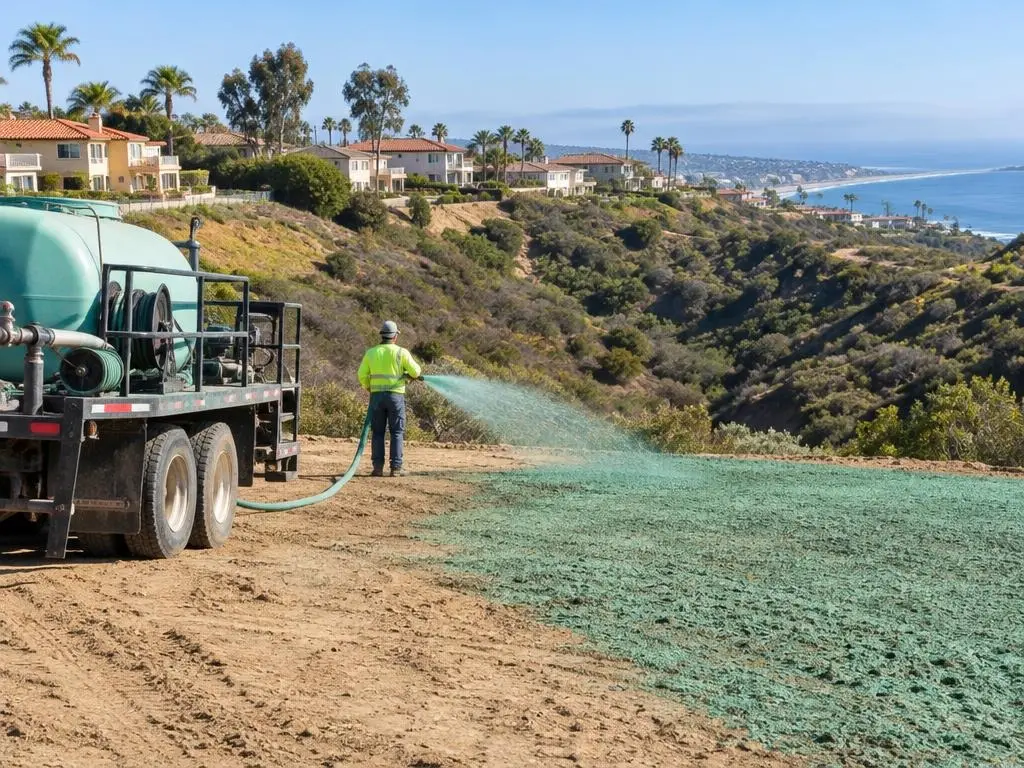
We fix the water first. A graded swale or a drainage trench carries runoff around the lawn area, and then we hydroseed.
Our lawn died years ago and the dirt is rock hard. Where do you start?
We rip or till the compacted soil, add topsoil where it is thin, level it and then seed. Skipping that step is the main reason renovations fail.
Do the cold nights in winter hurt new grass?
Freezing nights are uncommon, but the valley does get colder than the coast. We time seeding and choose blends with that in mind.
Do you put up silt fence for small infill builds?
Yes, along with inlet protection at nearby storm drains, and we take it down when the site is stable.
Free Estimates in El Cajon, CA
Get a written estimate for your El Cajon yard.
Hydroseeding Near El Cajon
- Hydroseeding in San Diego, CA
- Hydroseeding in Chula Vista, CA
- Hydroseeding in Oceanside, CA
- Hydroseeding in Escondido, CA
- Hydroseeding in Carlsbad, CA
- Hydroseeding in Vista, CA
- Hydroseeding in San Marcos, CA
- Hydroseeding in Encinitas, CA
- Hydroseeding in Santee, CA
- Hydroseeding in Poway, CA
- Hydroseeding in La Mesa, CA
- Hydroseeding in Ramona, CA
- Hydroseeding in Alpine, CA
- Hydroseeding in Lakeside, CA
- Hydroseeding in Fallbrook, CA
- Hydroseeding in Bonita, CA
- Hydroseeding in National City, CA
- Hydroseeding in Solana Beach, CA
- Hydroseeding in Del Mar, CA
- Hydroseeding in Rancho Santa Fe, CA
- Hydroseeding in Imperial Beach, CA