
Foothills of the Cuyamaca Mountains
Hydroseeding in Alpine, CA
Slope and lawn seeding near 2,000 feet, where rain runs higher than the coast.
- No-charge site visit, with your estimate put in writing
- Seed mix matched to coastal or inland conditions
- A written watering plan with every new lawn
Seeding Where the Mountains Begin
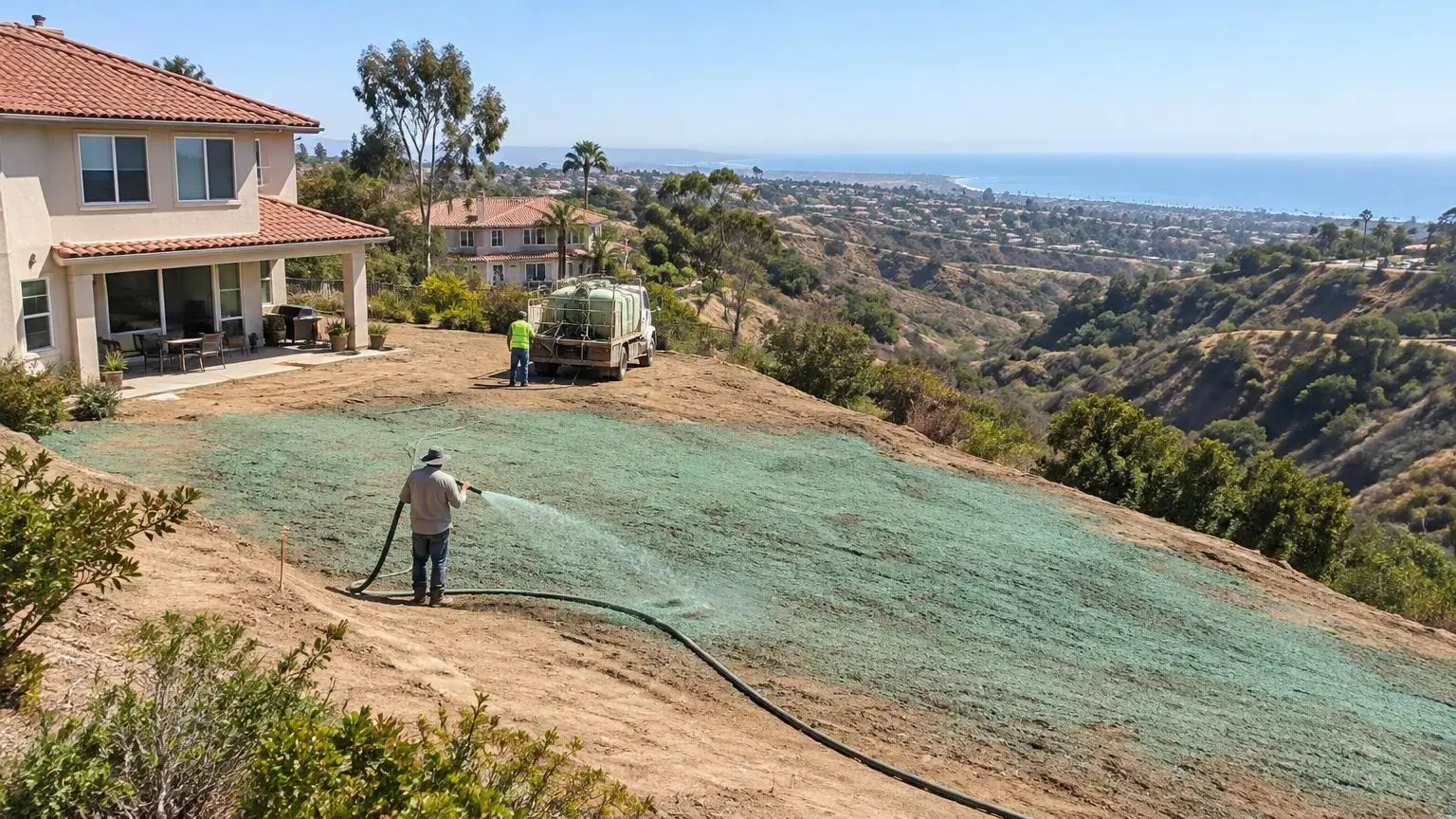
Hydroseeding in Alpine deals with steeper ground than most of the county. Alpine lies in the Cuyamaca Mountains where the coastal region meets the Peninsular Ranges, and the northern part of town climbs the slopes of Viejas Mountain, which tops out at 4,189 feet. Terrain here is open chaparral hillside cut by riparian canyons, and many homes sit on graded pads above or below a slope.
More rain, heavier storms
Alpine averages about 16 inches of rain a year, more than the coast, with January and February each delivering over 3 inches. Totals vary widely from month to month and year to year. The extra rain helps a new seeding once it is established, but heavy winter storms on bare slopes do real damage. On steep cuts we rely on blankets or BFM, never loose mulch alone.
Cold snaps and summer heat
January highs are in the low 60s, July highs in the upper 80s to low 90s, and lows under 35 degrees happen now and then, especially on Viejas Mountain's slopes. Light snow falls commonly above 3,000 feet and trace snow reaches town every two to three winters. We time seeding for early fall so roots develop before the coldest stretch, or for spring after the frost risk has passed.
Fire scars and brush clearing
The 2003 Cedar Fire ravaged the Alpine area. Burned or brush-cleared slopes are among the most common erosion problems in the backcountry. A fast hydromulch application with a low-growing seed mix covers the ground before the rainy season without building up tall fuel.
Horse ranches and forest edges
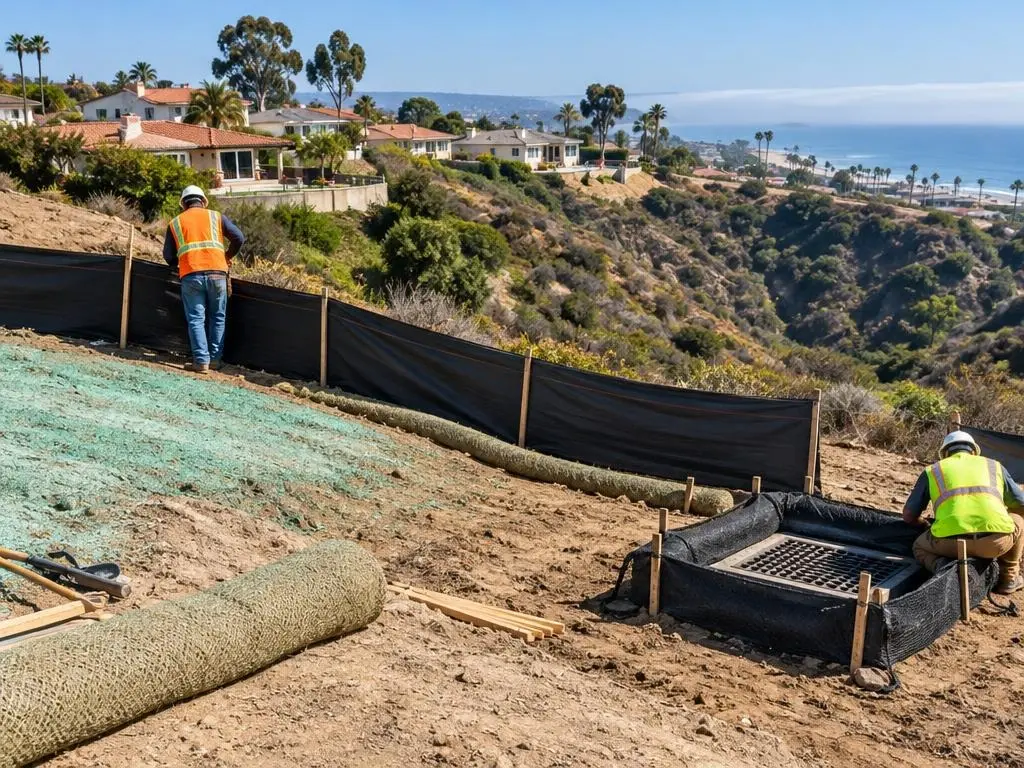
Horse ranches and small farms remain common around Alpine, and the town is largely surrounded by Cleveland National Forest. We seed paddocks and pasture, stabilize trail and driveway cuts and set silt fence downslope of new barns, pads and septic work.
Alpine work
- Steep-slope erosion control blankets
- Fire and brush-clearance reseeding
- Pasture and paddock seeding
- Pad grading and silt fence
Get a free estimate or call (619) 673-9356.
Alpine Mountain Facts
- Viejas Mountain. Viejas Mountain reaches 4,189 feet, and the northern part of Alpine sits on its slopes.
- Rainfall. Alpine averages 16.05 inches of rain a year, mostly November to March; February averages 3.65 inches.
- Snow and frost. Trace snow reaches town about once every two to three winters; light snow commonly falls above 3,000 feet.
- Cedar Fire. The 2003 Cedar Fire ravaged the Alpine area.
Alpine Questions
Our pad sits above a steep slope. What holds it best?
A pinned blanket or BFM over a deep-rooted seed mix, plus fiber rolls on contour. Loose mulch alone washes off steep slopes in Alpine storms.
Can you seed in winter up here?
Seed germinates slowly in cold soil. Early fall or spring is better; winter work is usually erosion protection first, seed second.
We cleared brush for fire safety and now the hill is bare. What now?
Hydromulch with a short, low-fuel seed mix protects the soil without regrowing tall brush.
Do you seed horse paddocks?
Yes. We seed pasture and paddocks and stabilize trail and driveway cuts on ranch property.
Free Estimates in Alpine, CA
Request a written estimate for your Alpine slope or pasture.
Hydroseeding Near Alpine
- Hydroseeding in San Diego, CA
- Hydroseeding in Chula Vista, CA
- Hydroseeding in Oceanside, CA
- Hydroseeding in Escondido, CA
- Hydroseeding in Carlsbad, CA
- Hydroseeding in El Cajon, CA
- Hydroseeding in Vista, CA
- Hydroseeding in San Marcos, CA
- Hydroseeding in Encinitas, CA
- Hydroseeding in Santee, CA
- Hydroseeding in Poway, CA
- Hydroseeding in La Mesa, CA
- Hydroseeding in Ramona, CA
- Hydroseeding in Lakeside, CA
- Hydroseeding in Fallbrook, CA
- Hydroseeding in Bonita, CA
- Hydroseeding in National City, CA
- Hydroseeding in Solana Beach, CA
- Hydroseeding in Del Mar, CA
- Hydroseeding in Rancho Santa Fe, CA
- Hydroseeding in Imperial Beach, CA